To be completed in Reggio Calabria on Sunday/Monday
The most southerly city of mainland Italy is Reggio Calabria, tucked right on the base of the toe, looking across the Straits of Messina on Sicily. There are of course two Reggio in Italy, the other a good piece further north in Emilia, the northern half of Emilia Romagna. Up that way, the local stadium is owned by Sassuolo, a wee town nowhere nearby, and rented by Reggiana, from the city, and by far the better supported side, even in the third tier presently.
Reggiana v Reggina has obviously been an Italian fixture, albeit pretty infrequently. The fleeting times that these sides have been riding a crest of a wave they met, but generally, a bit like a swiss weather vain clock, the other seems to be hiding while one succeeds. Given the regionalised world of Italian football below Serie B, the two would require to be in the first or second division to ever meet. They did cross paths in 2021, with Reggiana winning 2-1 at home the last time they played.
With a population of 168,000 Reggio Calabria should have a football team to make the city proud. However, a bit like Taranto much further along the “sole” of Italy, these are two “classic” basket cases of the Italian game. The level of passion in the south is undoubted, but that doesn’t always seem to equate to good governance, and often sees fans in despute with the owners. Whole season boycotts that carry on beyond even one term are nothing new, and very damaging. I wish the lessons would be learned but invariably when the good times come, it is almost immediately tempered with the knowledge that something is going to hit the fan.
The city of Reggio in the south is 3,500 years old. That’s a mind blowingly old place. During its existence the number of different names it has borne seems quite extraordinary, but reflective of a huge array of different settlers who tried to influence life here. The Greeks were the first to settle here, Erythra, Rhegion and Phoibeia were all names they gave it in the various BC centuries they held it. Rhegium was its first Latin name, with the Romans adding Juli for a little frisson of Roman flair, before the Arabic Emir of Sicily renamed it Riyyu in the 10th century. Next up, were the Normans for the 11th and 12th century, who hung around a jolly long time, calling it Risa whilst in the vicinity. The Catalans were next to have a go, and Regols was the name given by the Crown of Aragon in the late 13th century. Since then, Reggio was back and hasn’t once altered since, with the exception of a post unified Italian need to add Calabria to distinguish it from the one up north, perhaps a similar gaff took place in England with Under Lyme and Upon Tyne added for distinction.
Given all these characters have been involved in local architecture and politics, Reggio to this day prides itself on its diversity and acceptance. Which is maybe just as well, as a study of nearly 400 cities found Reggio to be one of the most densely populated places in Europe, with the least amount of green space of them all! At least it does have the escapism of the Mediterranean on one side, and intriguingly Reggio is exactly at the halfway point along the Sea between where it ends at the far end of Turkey at Antioch and presumably the mouth at the Algarve near Lagos.
The Oreste Granillo stadium, home to AS Reggina 1914 is certainly a green oasis amongst the housing, and indeed, even before even setting foot here, having seen the well appointed venue many times on TV, despite the sea being extremely close by, the apartment blocks around it stop any views of any passing ships. The flats however, do afford its owners with top views of the action from their balconies.
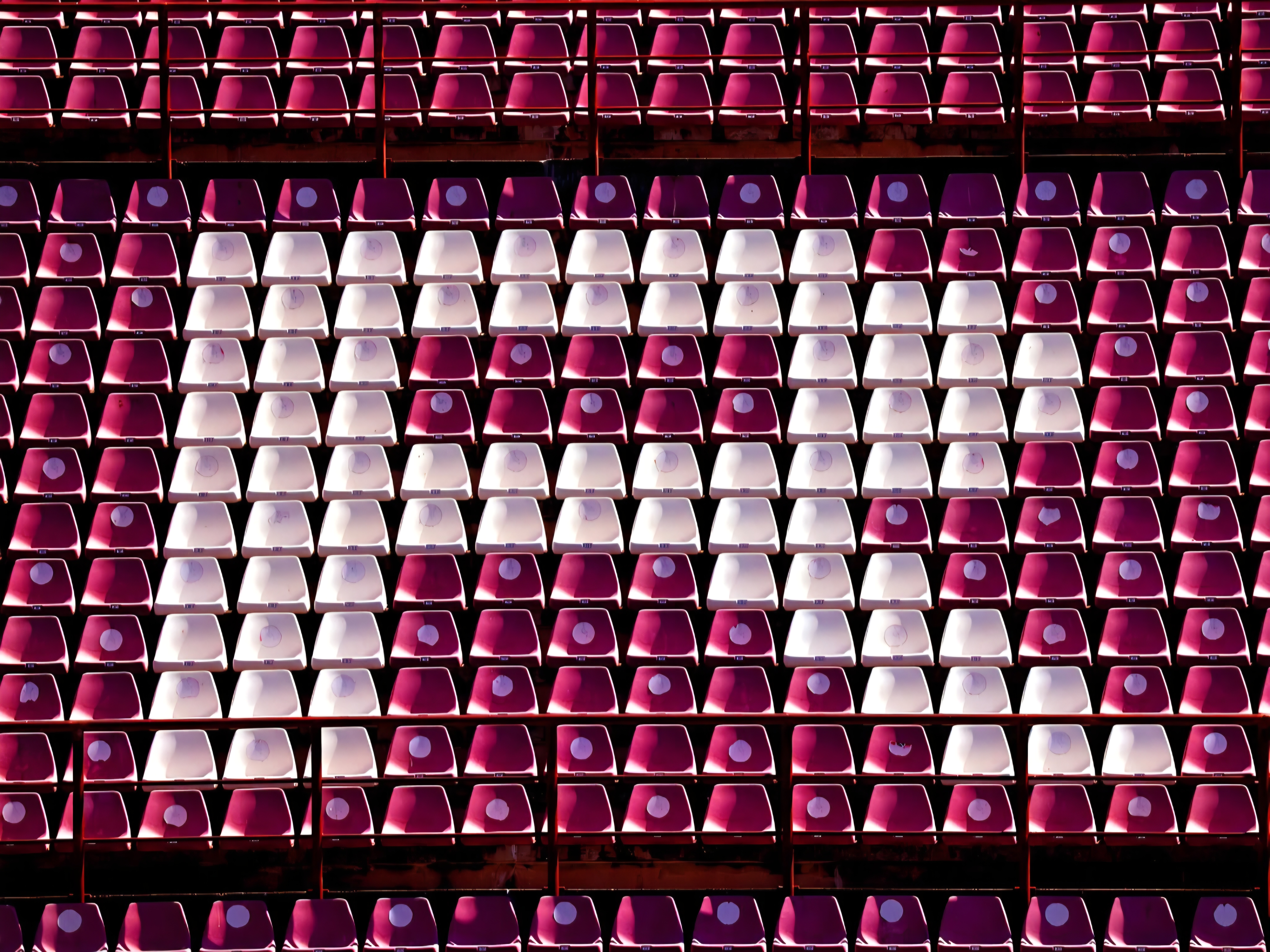
In an, “it could only happen in Italy” scenario, registering less than your stadium capacity as the official allowable number for any given season means paying less tax, restricts your audience. Reggina are currently in Serie D, the 4th tier, but the vast “Gradinata” opposite the mainstand will remain closed for the season as they didn’t register it, thereby making the capacity somewhat smaller than the official 27,763. Granted Reggina are down the leagues, but they have started the season in cracking form, and the locals are more than onboard. Southern clubs have a loyalty that is hard to find elsewhere. The result is matches selling out, which is great, but leaving vast swathes of unused terraces is just depressing.
The club’s “high” period was a near decade in Serie A, stretching from 1999 to 2009, with one solitary season back in B having failed to survive a second top flight campaign, narrowly losing their Serie A status briefly after a play off loss to Hellas Verona. Bouncing start back saw another relegation play-off, this time winning versus Atalanta in 2003. The lesson from that drop would be the last time the Bergamo outfit were caught struggling since. Survival for Reggina was great news, but by August 2006, when they were cited in Calciopoli investigations, it might have instilled a siege mentality that helped them keep going, but the slippery slope was opening up.
A 15 point dedication (reduced to 11) for 2006/07 wasn’t enough to sink Gli Amaranto (the dark reds), who defeated AC Milan on the last day to stay a point above the drop zone. The great escapology thing continued the season after too, with late rallying success under a new boss seeing them just stay up once more. There are only so many times you can circle the drain and avoid the inevitable, and Reggina waved farewell to the lofty heights at the end of 2008/09, thus far never to have returned.
That old chestnut, the excessive chasing the dream scenario kicked in, with investment failing to render the necessary result. It started a downward spiral, albeit a slow one, and it took another match fixing scandal to tip the odds of staying in B against them, and at the end of 2013/14 they were down another level. They did bounce back to B, but the long way round, with exclusion from Serie C for the 2015/16 term, having just avoided relegation to the fourth division in ‘14/15 for financial reasons and were declared bankrupt. The mere one league drop didn’t see them get immediately back to the professional ranks, scuppered by Cavese in the rather futile Serie D play offs. That said, the next season, they were knocked out in round one of those play offs, but being a big club they applied for access to a higher league to fill any gap in C, and despite a litany of mismanagement, they were successful.
In 2020 the club had won their Girone in the third tier and were back in Serie B, making a fine fist of it too. My first first sighting of Reggina came at Parma that season, where the away end was of an astonishing size and voice. Despite losing 2-0, the group of players and fans seemed united, and that enthusiasm took them all the way to the promotion play offs a couple of years later, despite a points deduction for non payment of tax! They would be unsuccessful in getting back to A alas, and then it all started to unravel. The club were excluded from the 2023/24 campaign in B, and found themselves back in Serie D due to financial irregularities.
Now in their third ‘D’ campaign this time around, having watched Siracusa and then Savoia win the title and gain promotion, this season feels crucial for Reggina. The start has been encouraging, but a first loss to financially struggling Trapani, who can’t even play at home this season was a warming shot ahead of my chosen match-up. It was a good one to be at too, with second placed Vibonese from further up Calabria headed south for an early season “big clash”. The Vibonati club are always in the mix at the top end of this league, save last season when they had a horror show and needed a play-out relegation success to retain their fourth tier status. Lets put this clash in perspective, as if we base it purely on population, it would become the ultimate David visiting Goliath affair, as Vibonati has just 3,344 inhabitants! Surviving in the fourth tier is a miracle enough for Vibonese, but it wasn’t going to stop them enjoying the opportunity of dampening the Reggio atmosphere.

